Not dinoflagellates
Three things you will meet when you look at "dino" slime under a microscope, and what they mean.
Cyanobacteria
Cyanobacteria are the most common pest "algae" in marine aquaria (they are actually bacteria). They appear as red, purple, black, or brown mats in low-flow areas of the tank, and the mats hold together well. They can be rather large. The ones I have seen in aquaria have all been Oscillatoria; people online often misidentify them as Lyngbya.
The test is simple: filaments mean cyanobacteria. You do not need to look for anything finer than that.
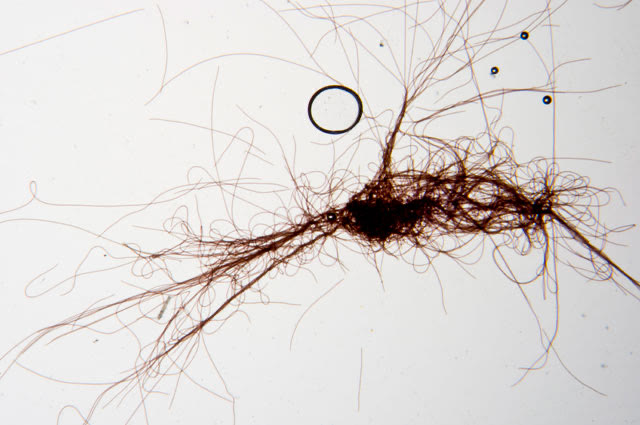
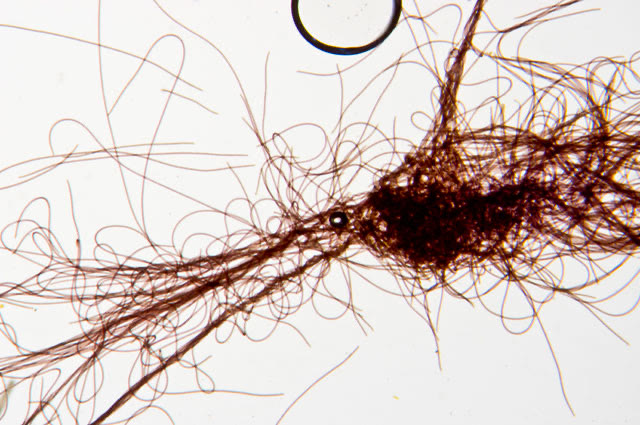
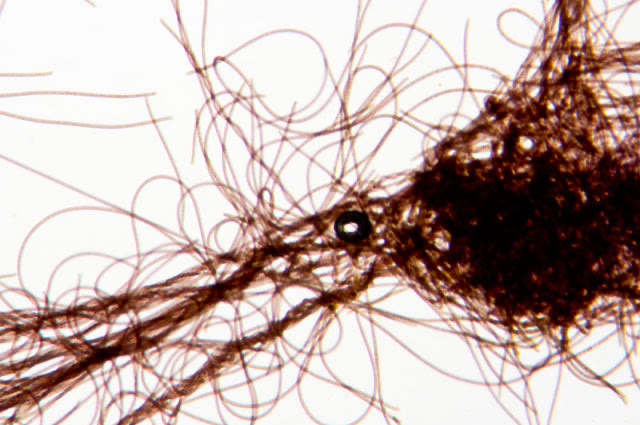
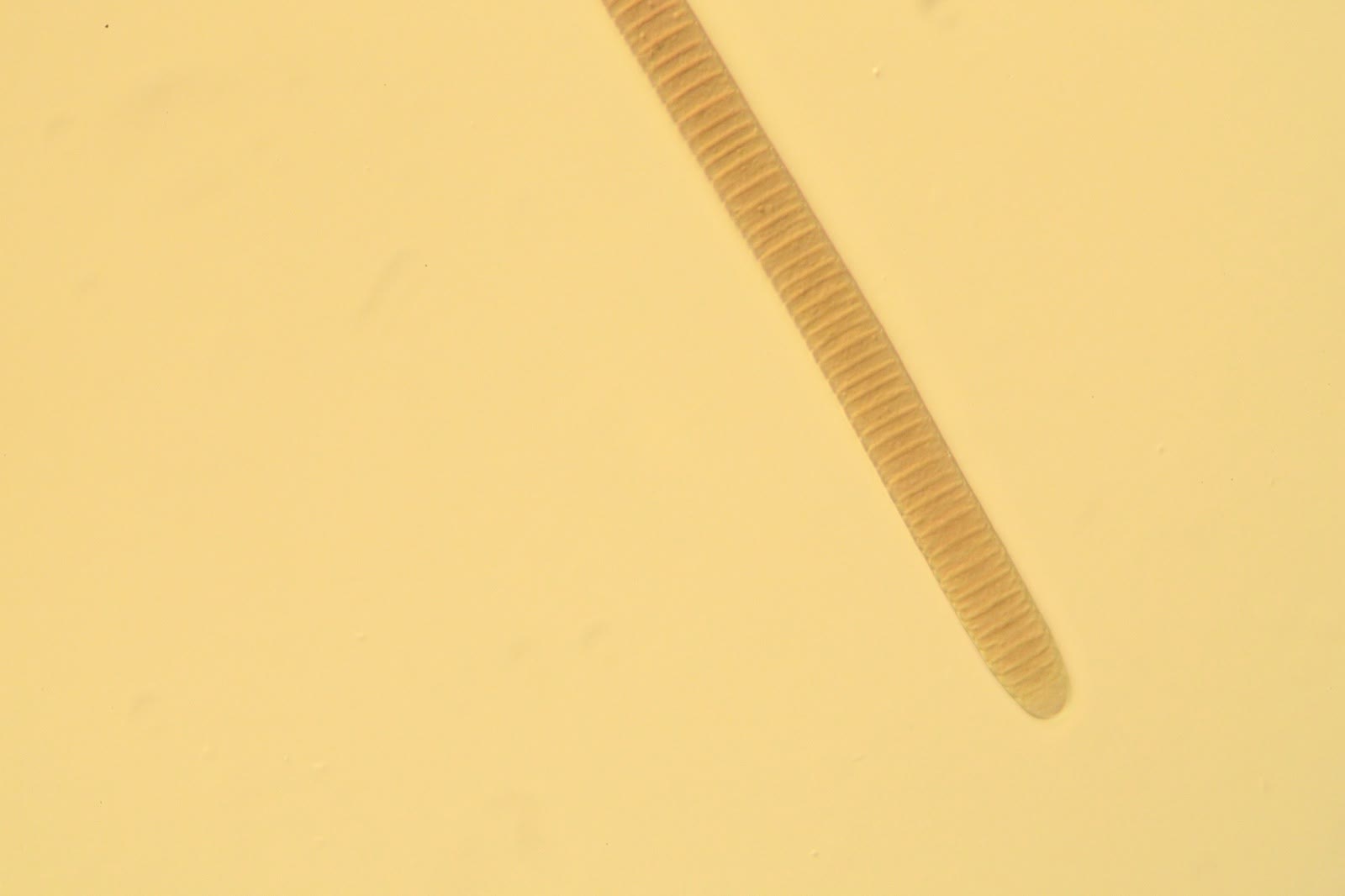
Cyano grows when nutrients are high, especially in low-flow spots. Things that help:
- Remove the mats by hand, and do it before any other method.
- Increase flow and bring the excess nutrients down: more frequent water changes, or an algae turf scrubber. Just do not drive nitrate and phosphate all the way down to the nearly unmeasurable levels that favor dinos. People who do that to fight cyano often end up with dinos. See the ecology notes.
- Cyanobacteria outgrow green algae in the short term, but if nutrients stay high for a while, green algae (usually hair algae of some sort) will usually outgrow the cyanobacteria. Dinoflagellates do best when nutrients are almost gone, which is why the usual cyano cures can trade one problem for another.
Diatoms
Diatoms are slow-moving, crystal-like organisms with pointed ends. They are common in new tanks, especially those with dry rock, and after sand has been stirred up. The usual cause is available silicate, so look at what you add to the tank, including tap water. The bloom is often temporary.
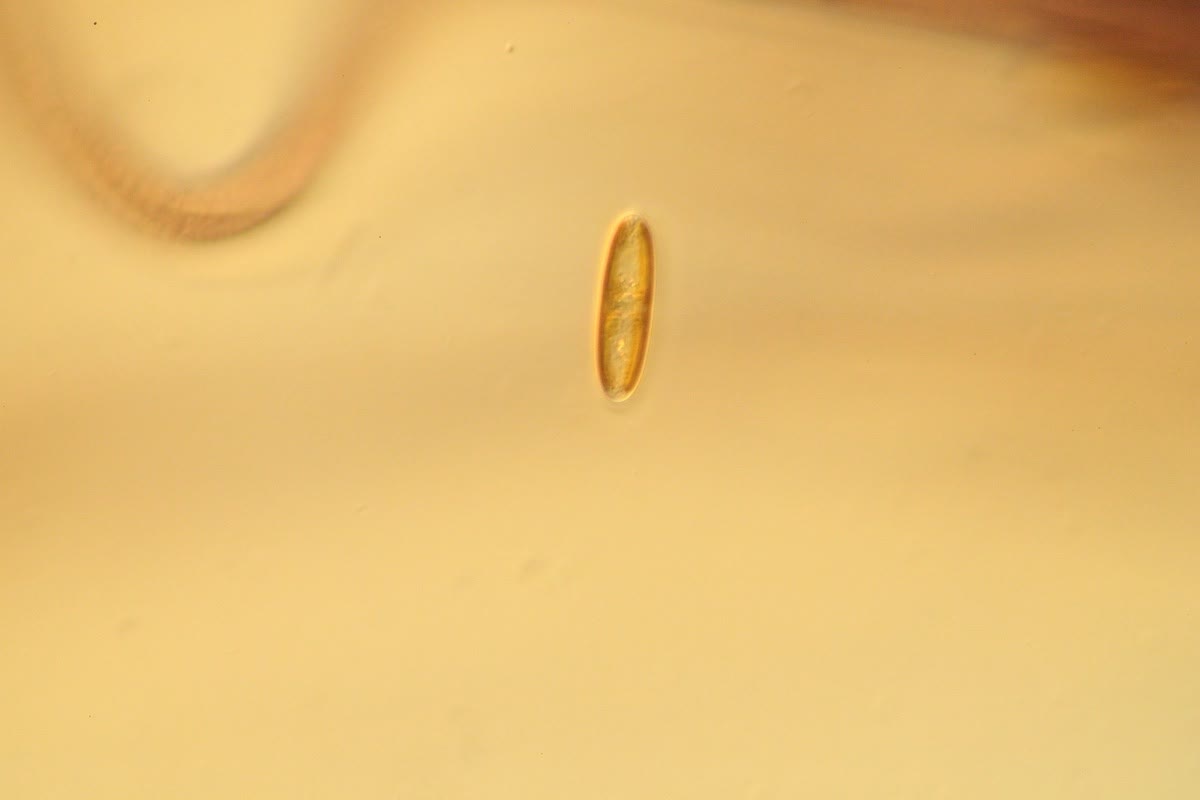
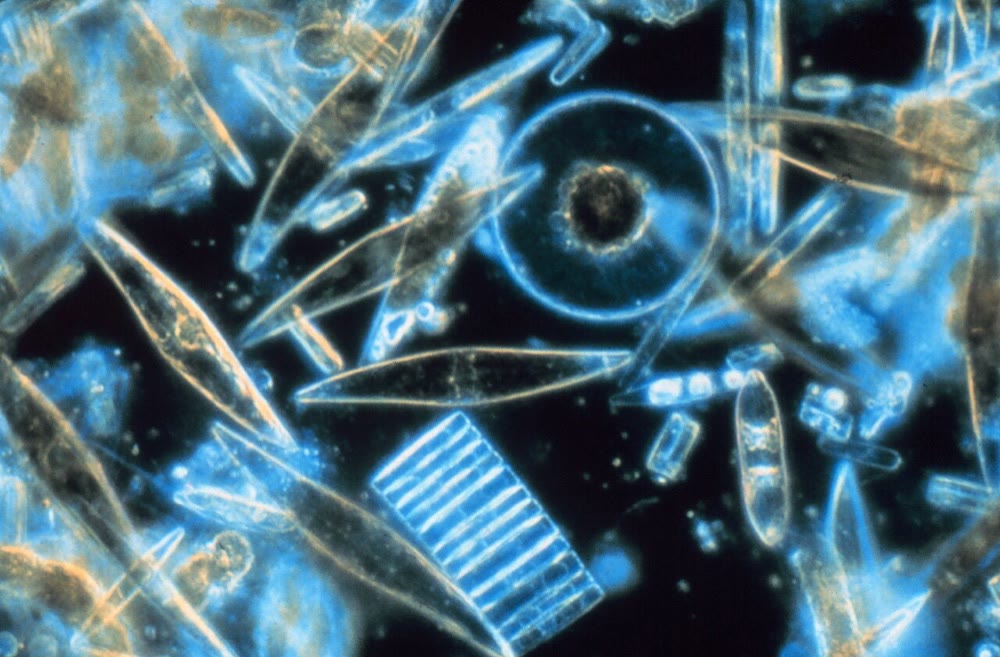

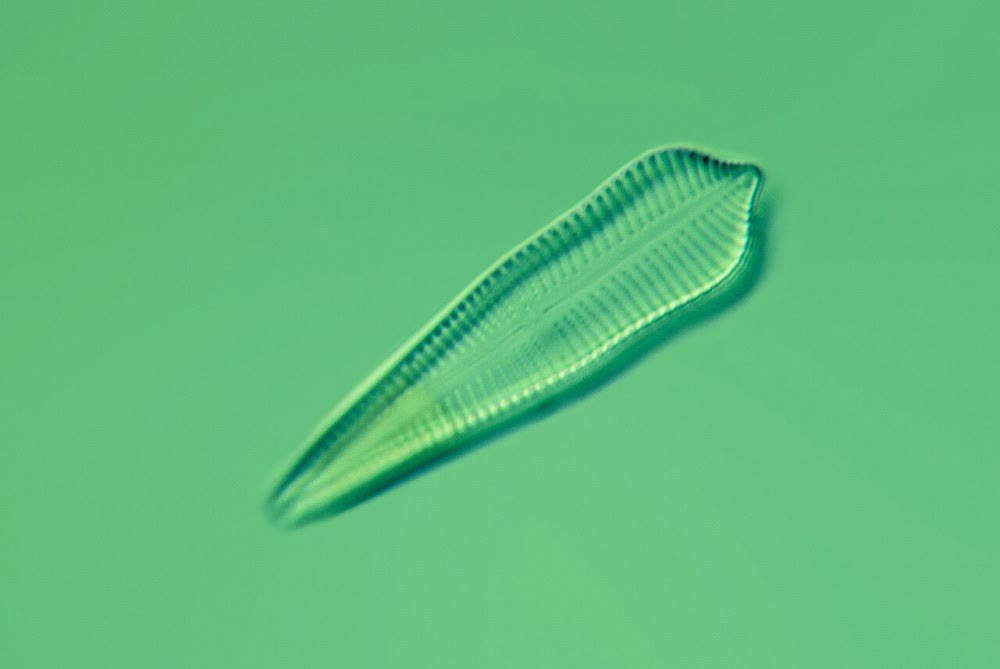

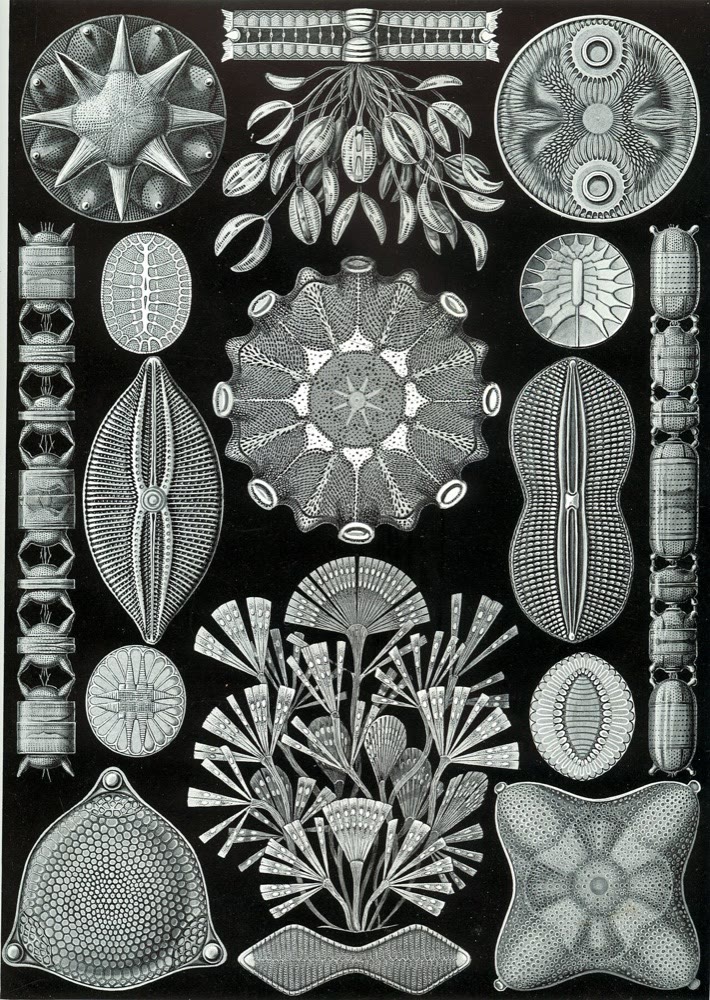
Dosing silicate on purpose to start a diatom bloom that outcompetes the dinos is an approach that many aquarists now use and recommend for dino problems. I first suggested it to an aquarist back in 2016. Because the dose and the water chemistry matter, confirm what you have under a microscope first, follow a trusted dosing guide, and monitor your water chemistry as you go. I do not give doses here.
Ciliates
Ciliates are single-celled animals covered in tiny hairs (cilia). They cannot photosynthesize, and many of them eat dinoflagellates, so they often boom in response to a dino bloom. You can tell them from dinos by shape and motion: they are often teardrop-shaped and look empty or clear, with visible cilia, and move more like predators than like swimming algae.
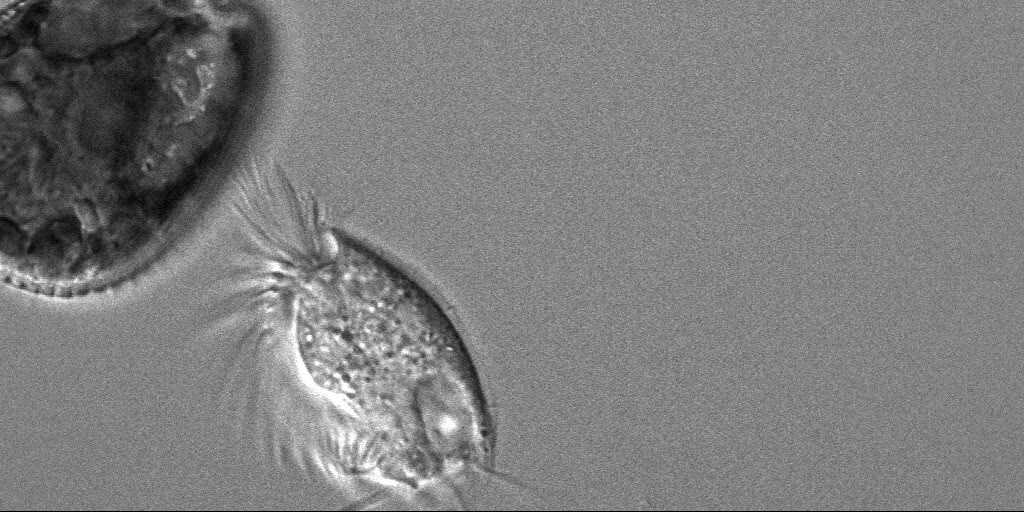
- If you see big ones sticking to your Ostreopsis, bumping into them a few times and spinning around each other, they are probably feeding.
- If a ciliate boom is eating your dinos, it may be better to let it run its course, and to address your nutrients and physically remove large patches of algae.
- A UV sterilizer will kill the ciliates too, and possibly faster than it kills the dinos.
- I have looked at the ciliate genus Favella, which includes species known to eat toxic benthic dinos. They form cysts, so they can lie dormant in packaged sand. They are hard to buy, so your best bet is to get sand samples from healthy tanks and hope some come along.
- Euplotes are another possible predator. The main issue is prey size: they handle Amphidinium easily but can struggle with the larger dinos. Make sure any culture you buy is a tropical marine species, since many are temperate and will not survive at reef temperatures.